
Loading...
Serving Cocoa, FL and surrounding areas. (321) 386-0373
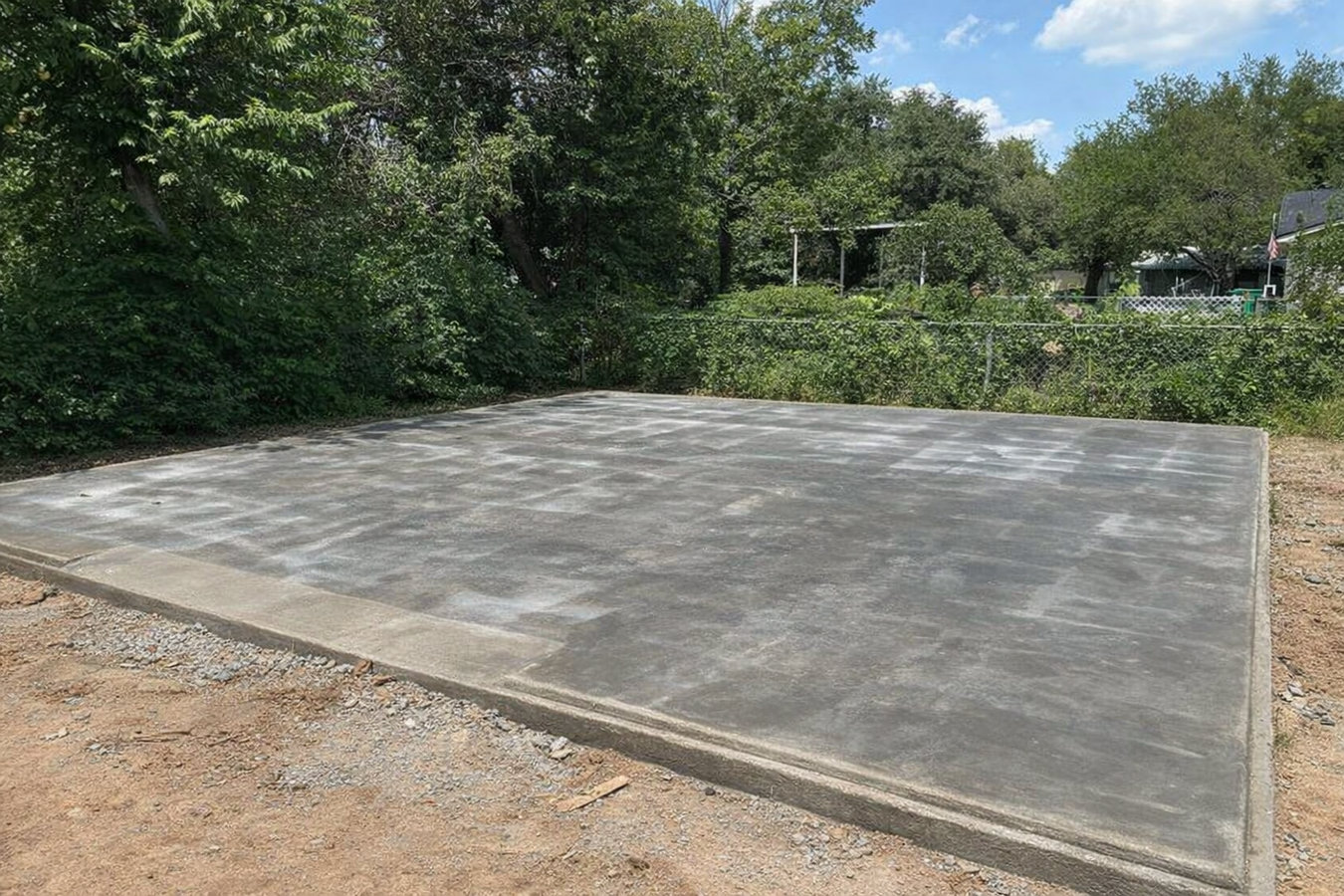
Your foundation supports everything above it. Get it right the first time - proper soil prep, moisture barriers, and a pour that passes inspection.
Slab foundation building in Cocoa means preparing the ground, placing a moisture barrier and steel reinforcement, and pouring a reinforced concrete slab directly on grade - most residential jobs take three to five working days of active construction, then 28 days to reach full curing strength.
Nearly every new home in Cocoa is built on a slab foundation because the flat terrain and high water table make crawl spaces or basements impractical. Whether you are starting fresh on a vacant lot, adding a room to an existing home, or converting an outdoor structure into living space, the foundation work sets the conditions for everything that comes after. A slab that shifts, cracks, or lets moisture through will cause problems throughout the building above it for decades.
Many homeowners also discover that their older concrete surfaces - like a patio or carport pad - are not thick or reinforced enough to carry a real structure. If you are unsure whether what you have can serve as a foundation, we can assess it alongside your foundation installation needs and give you an honest answer before work begins.
If you have a building project - a home, garage, room addition, or accessory structure - and there is no foundation yet, you need one before anything else. In Cocoa, virtually all new residential construction uses slab foundations because the flat terrain and high water table make other options impractical. Starting on a proper slab is the only way to protect everything built on top of it.
Hairline cracks in concrete are normal and usually harmless. But if you can slide a quarter into a crack, or if cracks run diagonally from the corners of doorframes, the slab has likely moved - not just settled slightly. In Cocoa's sandy soil, this can happen when the ground beneath was not properly compacted or when water has washed material away underneath. A contractor can assess whether repair or replacement is the right call.
When a slab shifts, the walls above it shift too - and the first thing homeowners usually notice is doors that suddenly stick, windows that will not open smoothly, or gaps appearing at the tops of door frames. This is especially worth paying attention to in older Cocoa neighborhoods where homes were built in the 1960s and 1970s, when soil preparation standards were less rigorous. It is a signal worth having a professional look at.
If your tile or vinyl flooring feels damp, if you notice a persistent musty smell near the floor, or if flooring adhesive is bubbling or lifting, moisture may be moving up through the slab from below. Given Cocoa's high water table, this is a real and common problem - and it often means the moisture barrier under the original slab was inadequate or has degraded over time. In some cases, a new slab section with a proper barrier is the right fix.
We handle every phase of slab foundation work - from the first site visit and permit application through soil preparation, form setting, moisture barrier installation, steel reinforcement, the concrete pour, and final inspection. For new construction, that means a full residential or outbuilding slab built to current Florida Building Code requirements, with a thickened perimeter beam and a heavy-duty moisture barrier designed for Cocoa's water table. We also work alongside foundation installation projects where the scope extends beyond a basic slab, including grade beam work and flood zone elevation requirements.
For homeowners adding onto an existing structure, we assess the current conditions before quoting, because room additions and garage conversions sometimes require tying a new slab into the existing one in ways that affect the scope and reinforcement plan. On every project, we pull the permit, schedule the inspection, and stay on site through the pour and finish. Once the slab is complete, you will have a documented, inspected foundation ready for the next phase of construction. If your project also involves concrete footings for columns, posts, or structural walls, we can coordinate both scopes so the work proceeds in the right order without scheduling gaps.
Suits homeowners building a new home or large addition on a vacant or cleared lot that needs a full foundation from scratch.
Suits homeowners expanding an existing home, requiring a new slab tied into the current foundation with matching depth and reinforcement.
Suits homeowners building a detached garage, workshop, or accessory structure that needs a code-compliant slab foundation.
Suits homeowners converting a carport, lanai, or thin patio pad into conditioned living space that requires a thicker, reinforced slab.
Cocoa sits along the Indian River Lagoon in a part of Brevard County where the water table is close to the surface and the soil is predominantly sandy. These two conditions directly affect how a slab foundation is built here. Sandy soil does not compact as firmly as clay-heavy soil found elsewhere, which means the ground preparation phase - grading, compacting fill material in layers, and sometimes bringing in engineered fill - takes longer and matters more than it would in many other markets. A contractor who rushes or skips this step is the most common reason slabs in this area crack years before they should. Homes near Cocoa Village and throughout the city's older neighborhoods often sit on ground that has shifted after decades of summer rain cycles, which is why thorough site assessment before any pour is not optional.
Parts of Cocoa also fall within FEMA-designated flood zones because of the city's low elevation and proximity to the Indian River. If your lot carries a flood zone designation, your slab may need to be elevated to a specific finished floor height - which affects both the design and the cost. We check flood zone status for every project before finalizing a design, and we coordinate with the Merritt Island, FL area and Melbourne, FL properties as well, since the same conditions apply across Brevard County. Knowing what your lot actually requires - rather than assuming - is what prevents costly corrections mid-project.
For authoritative guidance on Florida's building code requirements for foundation construction, see the Florida Building Commission. To verify your contractor's license, use the Florida Department of Business and Professional Regulation. To check your property's flood zone status, visit the FEMA Flood Map Service Center.
We visit your property - no quotes given blind over the phone - and look at the site, grade, soil conditions, and access for concrete trucks. You will have a written estimate within one business day of the visit.
We submit the permit application to the City of Cocoa Building Division and handle all the paperwork. Permit processing typically takes a few days to a couple of weeks. You do not need to make a single call to the city.
On the first day of work, the crew clears the area, removes soft soil, compacts fill material in layers, sets forms, installs the moisture barrier, and places the steel reinforcement grid. A city inspector visits at this stage - before the pour - to verify everything is in place.
Concrete trucks arrive and the crew spreads, levels, and finishes the surface while it is still workable. The pour for a standard residential slab takes four to eight hours. After the curing period, a final city inspection closes out the permit and your slab is ready for framing.
We handle the permit, the inspection, and every step of the pour. No surprises, no shortcuts.
(321) 386-0373Every slab foundation we build in Cocoa is permitted through the City of Cocoa Building Division and passes the required pre-pour inspection. That inspection is your protection - once the concrete is down, no one can verify what is underneath without tearing it up.
Sandy Brevard County soil requires real time and real compaction before concrete goes down. We do not rush this phase, because a slab on a poorly prepared base will crack no matter how good the concrete mix was. This is the step most contractors shortchange, and it is the one we take most seriously.
We verify your property's FEMA flood zone designation before finalizing any slab design. Properties in flood zones may require the finished floor to be elevated to a specific height, which affects both design and cost. Catching this before work starts saves you from expensive changes mid-project.
You can verify our license on the Florida Department of Business and Professional Regulation website. A licensed contractor carries the insurance and accountability that protects you if anything goes wrong - and gives you legal recourse that unpermitted work would never provide.
Every one of these points matters more in Cocoa than it might elsewhere - the sandy soil, the water table, the flood zones, and the city permit requirements all combine to make foundation work here genuinely more demanding. We have built that knowledge into how we work on every project we take on in Brevard County.
For projects that extend beyond a basic slab - including grade beam work, flood zone elevation, and full foundation systems for new or replacement builds.
Learn MoreLoad-bearing footings for posts, columns, walls, and structures that need a deep, reinforced concrete base below grade.
Learn MorePermit season fills up - reach out now and we will visit your site, check your flood zone status, and give you a written estimate before you commit to anything.