
Loading...
Serving Cocoa, FL and surrounding areas. (321) 386-0373
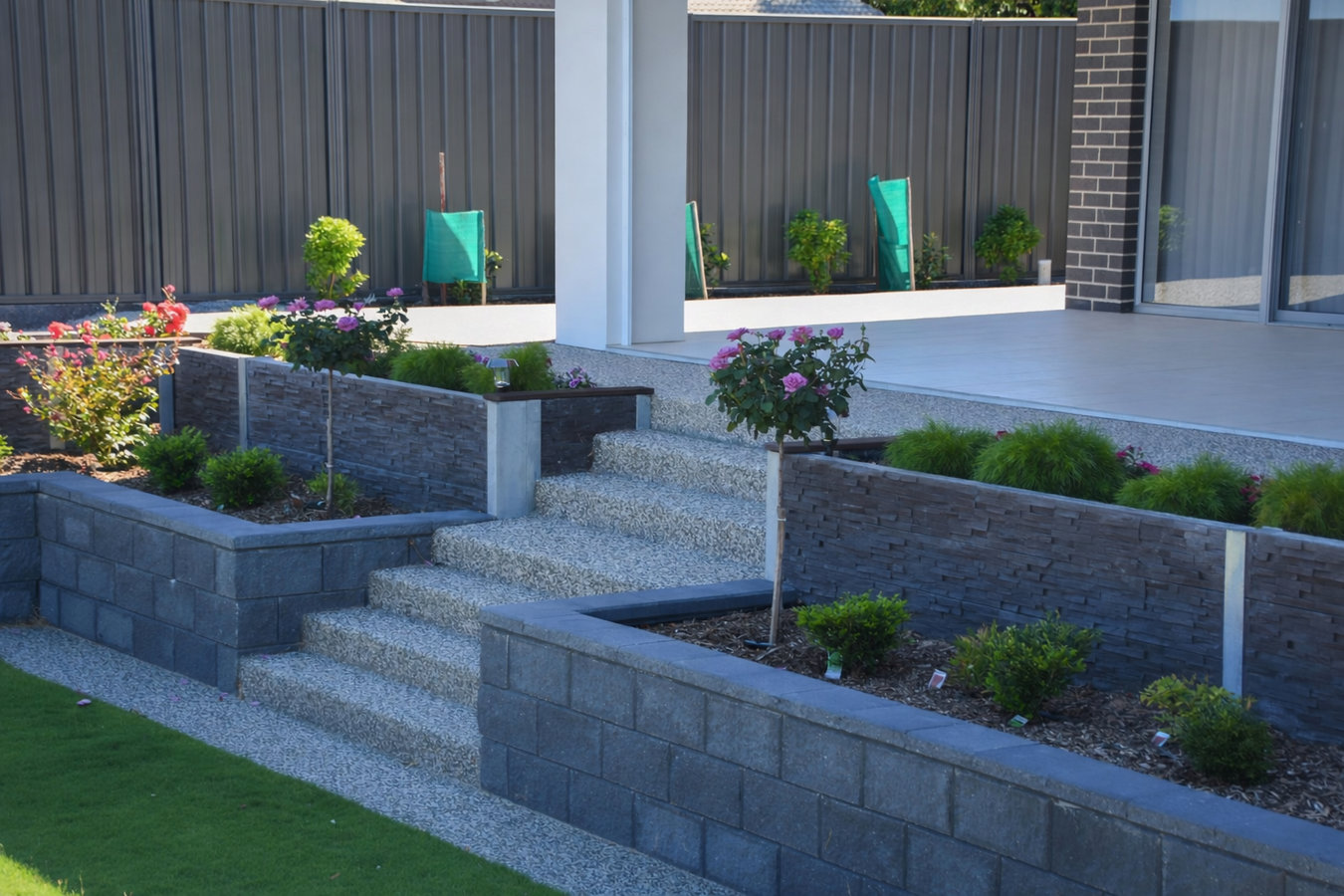
Cocoa yards lose soil every rainy season. A properly built retaining wall with real drainage puts an end to that - and keeps your landscaping, driveway, and foundation right where they belong.
Concrete retaining walls in Cocoa hold back soil on slopes and grade changes so it does not slide, erode, or wash away - most residential jobs wrap up in one to three days once work begins.
If you have a slope, a raised garden bed, or a low-lying area that floods after every summer storm, a retaining wall is what makes that space stable and usable. Cocoa's sandy soil and heavy seasonal rainfall mean erosion is not just a cosmetic problem - it puts landscaping, driveways, and foundations at risk. Many homeowners who call us also ask about concrete floor installation when they are leveling out or reclaiming outdoor spaces, and the two projects often go hand in hand.
A well-built retaining wall is not just about holding dirt. It includes a drainage system behind it - gravel backfill and a perforated pipe - to carry water away from the base before pressure builds up. Skipping that step is the most common reason walls fail early in Florida.
After a heavy summer storm you notice bare patches where ground cover used to be, or soil has moved toward the street or neighbor's yard. In Cocoa, where afternoon downpours run from June through September, an unprotected slope loses a little more ground every year. The longer you wait, the more foundation and landscaping repair gets dragged into the fix.
If you already have a wall and it is visibly tilting forward, shows horizontal cracks, or has gaps opening between the wall and the soil behind it, the wall is under stress it was not designed to handle. A leaning wall does not fix itself - it keeps moving until it fails. Getting a contractor out before the next storm season is the right call.
If water sits against your house after rain - especially on the side of the yard that slopes toward the structure - the grade is directing water the wrong way. A retaining wall combined with regrading redirects that water away from your foundation. In Cocoa's flat, low-lying areas near the Indian River, this problem is more common than most homeowners realize.
If part of your yard has been too steep for furniture, too rough for kids to use, or just sitting idle because of grade changes, a retaining wall is what makes it level and usable. Most homeowners in this situation are not fixing a failure - they are turning wasted space into something they can actually enjoy.
We build both poured concrete walls and concrete block walls, depending on what suits your yard, budget, and project scope. Poured walls are stronger for taller applications where soil loads are heavy. Concrete block walls are a good fit for shorter, garden-level projects - they go up faster and individual sections are easier to repair if something shifts years down the road. Both options include proper footing depth, gravel backfill, and a drainage pipe to carry water away from the base. For projects that touch concrete footings, we handle that work as part of the same build so there are no gaps between contractors.
If your retaining wall is over four feet tall, Brevard County requires licensed engineering drawings before the permit is issued. We coordinate that process so you do not have to. Projects that combine a wall with adjacent flatwork - such as a walkway or patio - can also be paired with our concrete floor installation work in a single project, which saves time and keeps the finished surfaces consistent.
Best for taller walls or high-load applications where a single solid mass is needed for strength.
Suits shorter garden-level walls where faster installation and easier future repairs are a priority.
Required for any wall in Florida's rainy climate - gravel backfill and perforated pipe prevent pressure buildup.
For walls over four feet in Brevard County that require licensed engineer drawings and a county inspection.
Cocoa sits on Florida's Space Coast, where much of the soil is sandy and has low natural load-bearing capacity. That means the footing beneath a retaining wall needs to be deeper and wider than it would in a region with denser soil. Brevard County averages around 50 inches of rain per year, with most of it falling between June and September. Retaining walls here face intense, repeated water pressure during storm season - which is why a proper drainage system behind the wall is not optional in this climate. Homeowners in Merritt Island deal with the same sandy soil and wet-season flooding pressure that Cocoa homeowners face, and the wall designs we use account for both.
Cocoa's terrain is largely flat, but low-lying areas near the Indian River Lagoon can hold standing water after storms. Some homeowners here need a retaining wall not to hold back a slope, but to create a raised planting bed or redirect water away from a structure. In those cases the drainage design behind the wall is even more critical because the surrounding ground has nowhere else for water to go. Residents in Cocoa Beach face similar coastal soil and drainage challenges, and we work across both communities regularly.
We want to see your property before giving you a price - not just take measurements over the phone. We look at the slope, soil, how water moves through the area, and any obstacles nearby. You will hear back within one business day to schedule that visit.
After the visit you get a written estimate breaking down labor, materials, drainage, and any permit or engineering fees. We pull the Brevard County permit - you do not have to navigate the building office yourself. If a contractor asks you to pull your own permit, that is a red flag.
The crew excavates, prepares the base, builds the wall, and installs the drainage system behind it. A typical residential wall takes one to three days. Your yard will look disrupted during this phase - that is normal. We clean up at the end of each workday.
If a permit was pulled, the county inspector visits before backfill is done. Once the inspector signs off, we complete the backfill and grade the soil so water drains away from the wall. Then we walk you through the finished project and explain any curing care.
We assess your slope, soil, and drainage needs in person before quoting. No pressure, no surprises - just a written estimate you can count on.
(321) 386-0373Every qualifying wall we build goes through the Brevard County permit office - no exceptions. That means a county inspector reviews the work before backfill, giving you documented proof the job met local code. That record protects you when you sell your home or file an insurance claim.
We design the drainage system behind every wall for Brevard County's rainfall reality - not just a generic approach. Gravel backfill and a perforated drain pipe are standard on every project. That is what separates a wall that lasts decades from one that starts leaning after the first major storm.
We do not price retaining wall projects over the phone. We visit your property, assess the soil, slope, and water flow, and then give you a written estimate that reflects your actual conditions. Cocoa's sandy soil means footing depth and drainage requirements vary by site - and that matters in the final price.
You can verify any contractor's Florida license on the state's website before signing anything. We hold a current license, carry the required insurance, and can be held accountable if something goes wrong. The American Society of Concrete Contractors recommends verifying license status for all concrete work - it takes about two minutes at myfloridalicense.com.
Every retaining wall project we take on in Cocoa starts with a real site visit and ends with a permitted, inspected job. That combination - local knowledge, proper drainage, and documented work - is what gives you a wall that holds through Florida's storm seasons year after year.
For current Brevard County permit requirements, visit Brevard County Building Services. For general retaining wall standards, the American Concrete Institute publishes guidance on drainage and wall design.
New concrete floors for garages, additions, and interior spaces - poured to current code with proper moisture barriers.
Learn MoreLoad-bearing footings for walls, structures, and additions - sized for Cocoa's sandy soil conditions.
Learn MoreStorm season arrives every June - locking in your project date now means your wall is in place before the ground takes another beating.